Stem cell therapy uses cells from your own body to target the source of chronic back pain, usually a worn down spinal disc, instead of just covering up the pain.
Research shows real improvement in pain and movement for the right patients, with a strong safety record so far.
Here is what the evidence shows, who tends to qualify, and what to expect from start to finish.
If you have lived with back pain for months or years, you have probably tried the usual steps.
Physical therapy.
Anti-inflammatories.
Maybe an epidural injection that helped for a little while and then wore off.
Stem cell therapy for back pain has become a popular next option for people in exactly this position, and for good reason: it targets the actual tissue causing the pain instead of just numbing the area around it.
It is also a treatment surrounded by a lot of marketing claims that outpace the science.
This guide breaks down what peer-reviewed research actually shows, who tends to be a good candidate, and what the procedure involves.
SEE IF STEM CELL THERAPY IS RIGHT FOR YOU
What Is Stem Cell Therapy for Back Pain?
Stem cell therapy for back pain is a regenerative procedure that uses cells drawn from your own bone marrow or fat tissue and injects them into a damaged spinal disc, joint, or surrounding tissue.
The goal is to calm inflammation and trigger your body’s own repair process, rather than simply masking pain with medication.
Most chronic back pain traces back to degenerative disc disease, where the soft cushions between your vertebrae lose height and hydration over time.
As the discs break down, nearby nerves can become irritated, which is what causes the aching, stiffness, or shooting pain many people feel.
At Aven Clinic, this is the type of damage our regenerative stem cell therapy program is designed to address directly, rather than only treating the symptoms around it.
How Does Stem Cell Therapy Work on a Damaged Spine?
Once injected, stem cells do not usually turn into brand new disc material themselves.
Instead, they release growth factors and anti-inflammatory signals that calm irritated tissue nearby and prompt your body’s own cells to begin repairing the disc or joint.
Researchers call this a paracrine effect, since the cells work mainly by signaling, not by direct replacement.
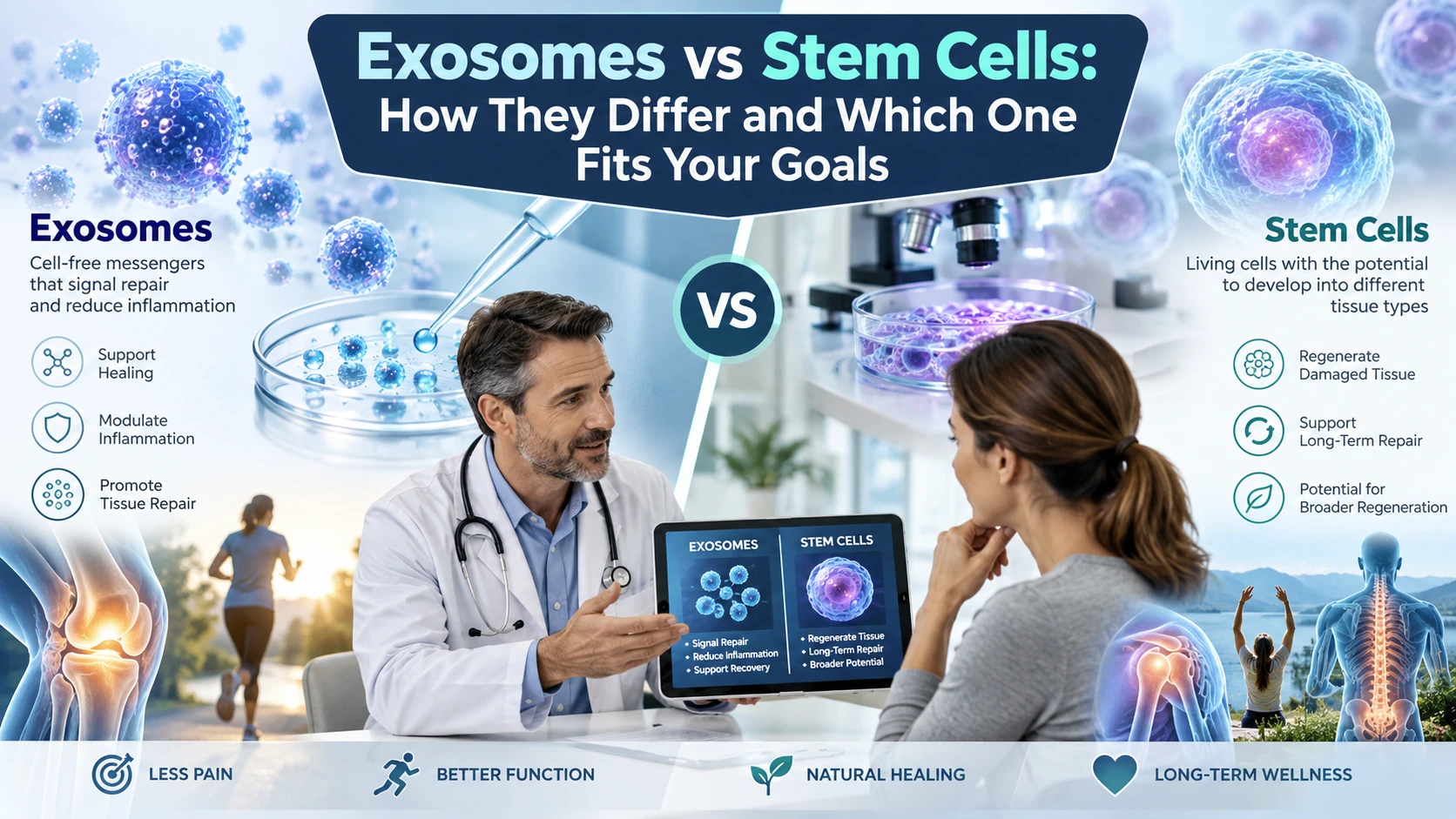
Some of that signaling happens through exosomes, the tiny packages of signaling molecules stem cells release into the surrounding tissue.
Research on mesenchymal stem cells, the type most commonly used for back pain, points to both this signaling effect and a smaller amount of direct engraftment, where some injected cells settle into the damaged area and release trophic factors that support tissue repair.
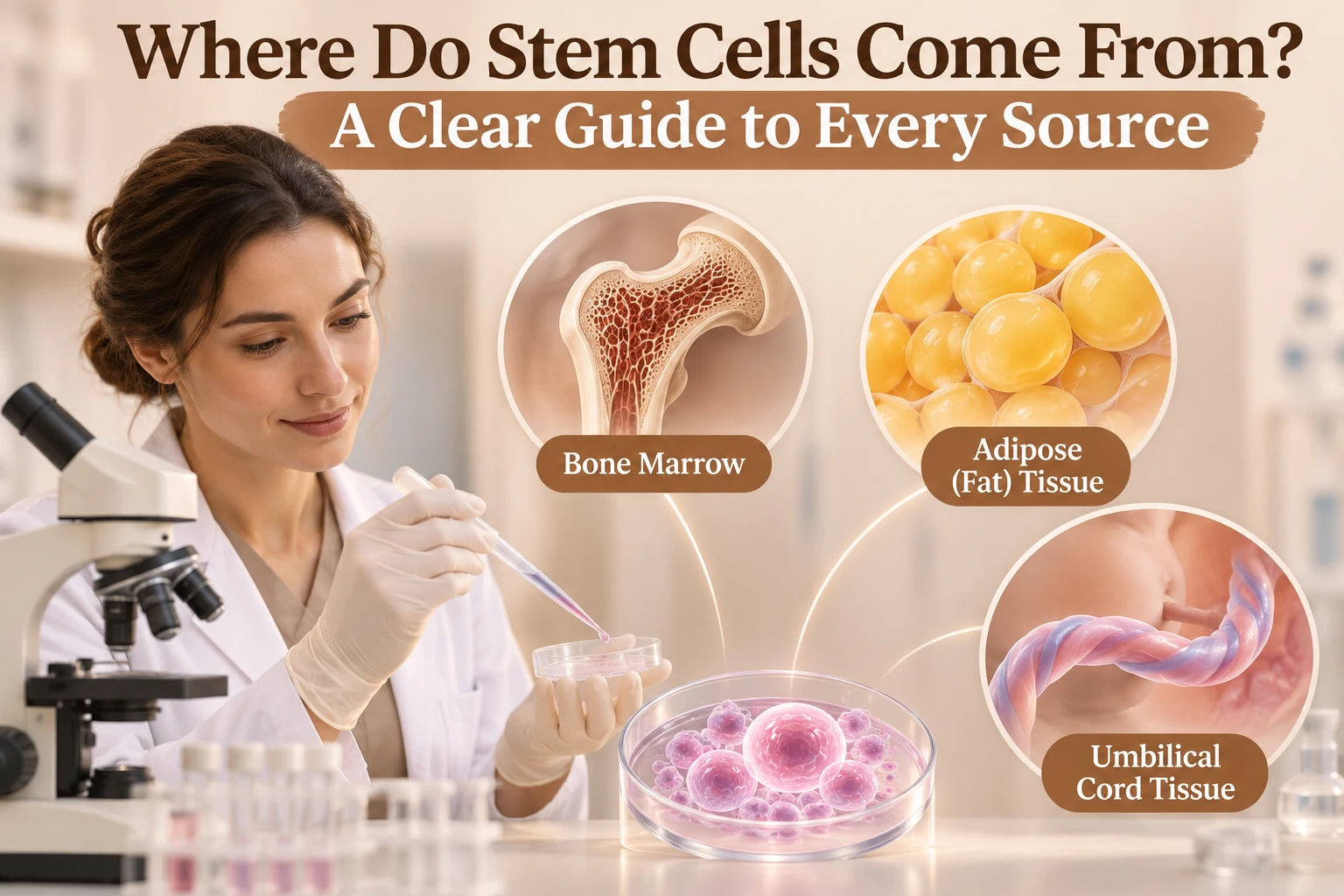
The cells themselves come from your own bone marrow or fat tissue, depending on which source your provider chooses for your treatment.
Bone Marrow vs. Adipose-Derived Stem Cells
Clinics generally pull stem cells from one of two places: bone marrow, usually from the hip bone, or fat tissue, usually from the abdomen or thigh.
Bone marrow has been studied the longest and is the source most back pain research is built on.
Fat tissue is easier to collect in large quantities and tends to cause less discomfort during harvesting, though researchers are still comparing how the two cell types behave once they are injected.
Some providers use one source for disc pain and the other for joint pain, depending on which tissue responds best to each cell type.
What Does the Research Actually Show?
A 2025 meta-analysis of 283 patients across eight clinical studies found that stem cell injections led to statistically significant drops in both pain scores and disability ratings, with benefits still measurable one to three years later.
Separate studies have also documented actual healing on MRI scans, not just reported pain relief.
In that meta-analysis, patients’ disability scores and pain ratings both improved by a statistically significant margin, and imaging showed measurable improvement in disc health as well.
A separate five year follow-up study on patients with facet joint related back pain found that every participant reported improved pain scores at one week, one year, and five years after treatment.
That said, much of the underlying mechanism research is still in earlier stages.
Animal studies have shown disc height and MRI signal improving by 81 to 91 percent in treated groups, compared to 60 to 67 percent in untreated control groups, which is promising but not the same as a finished large scale human trial.
Bigger human studies, including an ongoing Phase 3 trial testing a stem cell product specifically for chronic low back pain, are still working to confirm exactly how durable these results are over time.
Am I a Candidate for Stem Cell Therapy for Back Pain?
Good candidates usually have moderate chronic back pain from early to mid stage disc degeneration, have already tried conservative treatments like physical therapy or injections without lasting relief, and do not have an active infection, cancer, or autoimmune condition that would interfere with healing.
Research on patient selection points to a specific imaging marker: a Pfirrmann grading of III or IV on MRI, which indicates moderate disc degeneration rather than the most advanced, bone-on-bone stage.
Patients with severe, end stage disc collapse typically do not respond as well and are usually better candidates for surgical options instead.
The same regenerative approach is also used for joint conditions like knee osteoarthritis, so if you have back pain alongside joint pain elsewhere, it is worth mentioning both during an evaluation.
What Happens During the Procedure and Recovery?
The process starts with a physical exam and imaging to confirm where your pain is coming from and whether your disc or joint damage fits the profile that tends to respond well.
If you qualify, a small sample of bone marrow or fat tissue is collected, usually from the hip or abdomen, and processed to concentrate the stem cells.
Using imaging guidance, your provider then injects the concentrated cells directly into the damaged disc, joint, or surrounding tissue.
The entire visit is typically done on an outpatient basis, with no general anesthesia required.
Most patients feel some soreness at the injection site for a few days, similar to a strenuous workout.
Many people return to light activity within a day or two.
As for how long results typically take to appear, most patients notice initial improvement within several weeks, with continued gains over the following months as the tissue keeps healing.
Stem Cell Therapy vs. Back Surgery: How Do They Compare?
Stem cell therapy is far less invasive than spinal fusion surgery, with a much shorter recovery and no permanent hardware placed in the spine.
Surgery can still be the right choice for severe structural problems, but outcome data on fusion specifically has been mixed when it comes to pain relief alone.
In a study following 1,450 patients, only 26 percent of people who had fusion surgery had returned to work two years later, compared to 67 percent of a comparable group that skipped surgery.
That gap does not mean surgery is never the right call.
It is still often necessary for severe nerve compression, instability, or structural collapse that regenerative treatments cannot fix.
But for patients whose pain comes mainly from a degenerating disc rather than a structural emergency, it helps explain why stem cell therapy has become a serious option worth discussing before committing to an operating table.
Is Stem Cell Therapy for Back Pain Safe?
Across the clinical studies reviewed so far, stem cell injections for back pain have shown a strong safety record, with no serious adverse events reported and only minor, temporary side effects like soreness or swelling at the injection site.
The 2025 meta-analysis of 283 patients reported no adverse events following the injections, and earlier research found a similarly clean safety profile.
The bigger safety consideration is choosing the right provider.
Stem cell therapy for back pain is not currently FDA-approved as a disease treatment, and the FDA has pushed for stronger oversight of clinics marketing unproven cell-based products directly to patients.
That makes it worth confirming that any clinic you consider is physician-led and operating within the FDA’s framework for human cell and tissue products, rather than selling an unregulated product with no medical oversight.
How Aven Clinic Approaches Regenerative Treatment for Back Pain
At Aven Clinic in Boca Raton, we treat back pain the same way we treat everything else: by looking for the root cause before recommending a treatment plan.
That starts with a full evaluation of your imaging, your pain history, and what you have already tried, so we can tell you honestly whether stem cell therapy is likely to help in your specific case.
Dr. Baker and our team offer degenerative disc disease treatment using both stem cell therapy and PRP, and we are upfront about which option fits your situation best, since stem cell therapy and PRP work differently and are not interchangeable.
For patients dealing with joint pain alongside their back pain, we also offer PRP joint injections and a broader regenerative cell therapy program built around the same root-cause philosophy.
South Florida patients travel to our Boca Raton office from across the region for this kind of integrative, physician-led evaluation, because getting the diagnosis right matters just as much as the treatment itself.
FAQs: Stem Cell Therapy for Back Pain
Is stem cell therapy effective for back pain?
Research shows meaningful improvement in pain and disability scores for many patients, particularly those with disc-related back pain who have tried conservative treatment first. Results vary by patient and by how advanced the underlying disc or joint damage is, so an in-person evaluation is the only way to know your own odds of benefiting.
How long does recovery take after stem cell therapy for back pain?
Most patients feel some soreness at the injection site for two to three days and return to light activity within a day or two. Noticeable pain relief typically begins within a few weeks, with continued improvement over the following months.
What is the difference between stem cell therapy and PRP for back pain?
PRP uses concentrated platelets from your own blood to trigger healing, while stem cell therapy introduces new regenerative cells directly into the damaged tissue. Both are regenerative options, but they work through different mechanisms and are often recommended for different stages of disc or joint damage.
Who is a good candidate for stem cell therapy for back pain?
Good candidates typically have moderate disc degeneration confirmed on MRI, have already tried physical therapy or other conservative treatments without lasting relief, and do not have an active infection, cancer, or autoimmune condition that would interfere with healing.