Stem cell therapy for knees uses a concentrated dose of your own cells to calm inflammation and support joint repair.
A 2025 review of 25 clinical trials found it modestly improves pain and function compared with a placebo injection.
It tends to work best for mild to moderate osteoarthritis in people who want to delay or avoid knee replacement surgery.
Knee pain has a way of taking over your life.
Stairs become a negotiation.
A walk with your dog turns into a decision you have to think through first.
If you’ve searched for stem cell therapy for knees, you’ve probably run into two very different stories.
Some clinics promise it can fix almost anything.
Some doctors insist it barely works at all.
The truth sits in between, and it’s backed by real research.
In April 2025, researchers published the largest and most rigorous review yet of stem cell injections for knee osteoarthritis.
It pulled together 25 clinical trials and more than 1,300 patients.
The results weren’t a miracle cure, but they weren’t nothing either.
Here’s what the data actually shows, who tends to benefit, and what a realistic course of stem cell treatment for knees looks like.
What Is Stem Cell Therapy for Knees?
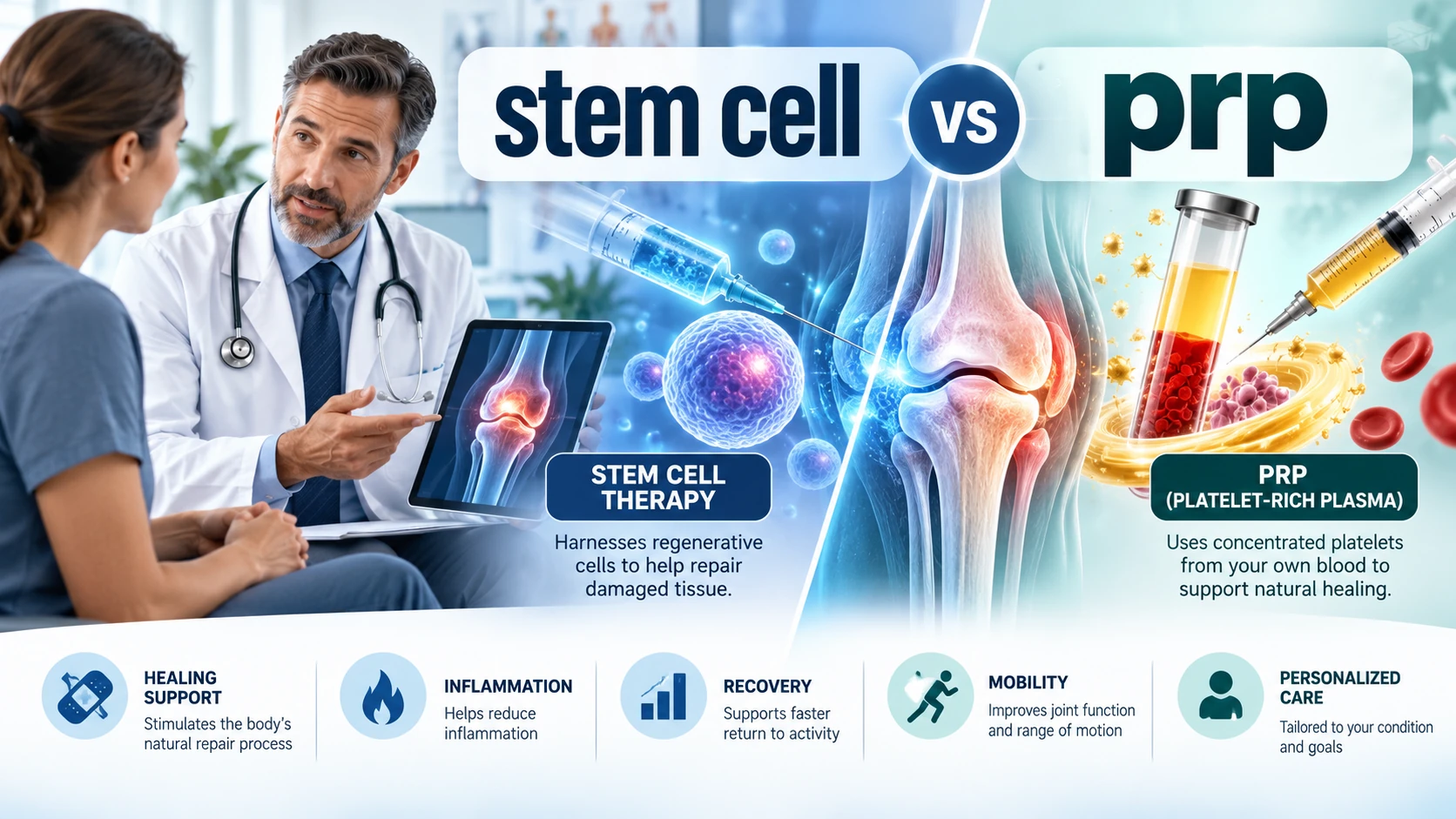
Stem cell therapy for knees is a non-surgical procedure that uses a concentrated dose of your own stem cells, usually drawn from bone marrow or fat tissue, and injects them directly into the knee joint.
The goal is to calm inflammation and support the body’s own repair process in a joint worn down by osteoarthritis, cartilage loss, or old injury.
Unlike a steroid shot or pain medication, stem cells don’t just cover up the symptom.
Mesenchymal stem cells, the type used in most knee protocols, release signaling molecules that reduce inflammation and recruit the body’s own repair cells to the area.
That’s why more patients are turning to regenerative stem cell therapy instead of long-term medication or a knee replacement they aren’t ready for yet.
How Does Stem Cell Treatment for Knees Work?
Stem cell treatment for knees works by harvesting a small sample of your own tissue, concentrating the stem cells it contains, and injecting that concentrate into the joint under imaging guidance.
Most protocols happen in a single same-day visit, with no incision, no hospital stay, and no general anesthesia.
Where the Cells Come From
Most clinics use one of two sources: bone marrow, typically drawn from the hip bone, or adipose tissue, taken through a small fat extraction similar to mini liposuction.
Some providers also offer donor-derived cells from umbilical cord tissue.
The FDA treats these sources differently.
Same-day procedures that use a patient’s own minimally processed cells fall into a lower-risk regulatory category than products made from donor tissue or cells that are cultured and expanded in a lab.
What Happens During the Procedure
A typical visit starts with a physical exam and imaging to confirm the joint is a good candidate.
The cells are harvested, spun down in a centrifuge to concentrate them, and injected into the knee using ultrasound guidance for accuracy.
Most patients are in and out within a few hours and can walk out on their own.
Does Stem Cell Therapy for Knees Actually Work?
The best current evidence says yes, modestly.
A 2025 Cochrane review of 25 randomized trials pooled data from 1,341 patients.
It found that people who got stem cell injections reported better pain and function scores at six months than those who got a placebo, and were more likely to call the treatment a success at one year.
The numbers are specific.
At six months, the placebo group averaged a pain score of 4.5 out of 10, while the stem cell group averaged 3.3.
On a 0 to 100 function scale, the stem cell group scored about 14 points better.
At twelve months, 683 out of every 1,000 stem cell patients reported their treatment was a success, compared with 530 out of every 1,000 placebo patients.
SEE IF STEM CELL THERAPY IS RIGHT FOR YOU
Who Is a Good Candidate for Stem Cell Treatment for Knees?
The best candidates have mild to moderate knee osteoarthritis, have dealt with symptoms for at least six months, and have already tried conservative options like physical therapy or anti-inflammatory medication without enough relief.
Most research enrolls patients between 40 and 70 years old with a pain level of 4 to 8 out of 10.
A study of patient expectations found that people tend to do best when they understand stem cell therapy as a way to reduce pain and improve function, not as a guaranteed substitute for a knee replacement.
Patients with severe bone-on-bone arthritis, large meniscal tears, prior knee surgery, or significant joint misalignment are usually steered toward other options first.
At Aven Clinic in Boca Raton, that evaluation starts with a physical exam and imaging, the same process used for our broader osteoarthritis treatment in Boca Raton, so you know where your joint actually stands before any injection gets scheduled.
Stem Cell Therapy vs. PRP vs. Knee Replacement Surgery
Stem cells aren’t the only regenerative option, and they aren’t always the right starting point.
Here’s how the three most common paths compare.
| Stem Cell Therapy | PRP Injections | Knee Replacement | |
| Invasiveness | Minor outpatient procedure | Simple injection | Major Surgery |
| Recovery Time | A few days of soreness | A day or two | 4 to 6 weeks |
| Best For | Mild to moderate osteoarthritis | Mild osteoarthritis, tendon irritation | Severe, bone-on-bone arthritis |
A literature review comparing the two injections found that both are safe and effective for knee osteoarthritis, with stem cells showing an edge in some studies for pain and function.
PRP still remains the simpler, cheaper first step for many patients.
Because PRP uses your own blood rather than harvested tissue, clinics like Aven Clinic often start patients there with PRP joint injections before considering stem cells, reserving knee replacement for cases where the joint damage is too advanced for either option to help.
What to Expect: Procedure Day, Recovery, and Timeline
Let’s take a look at what you can expect with your procedure:
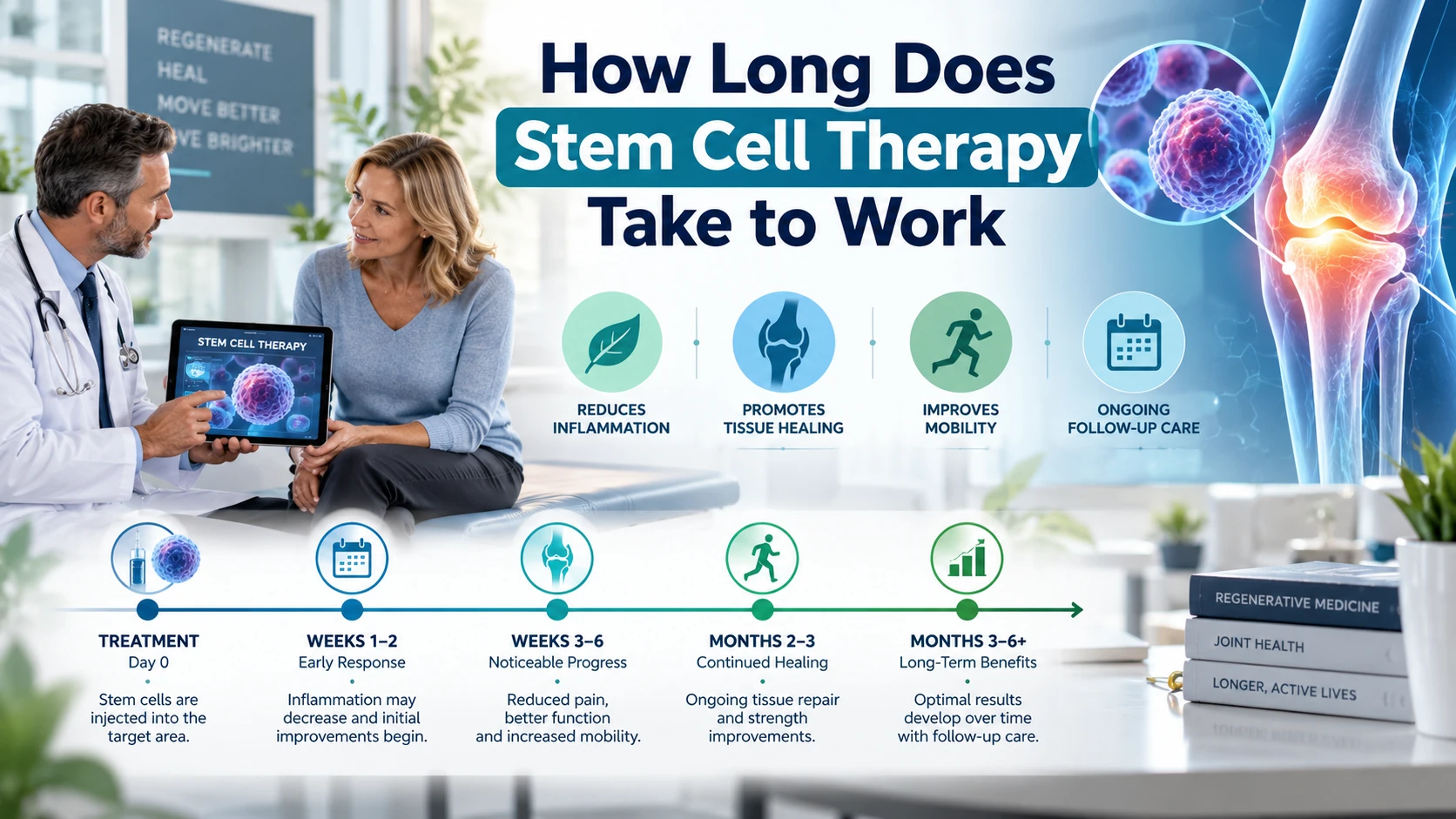
Immediately After Treatment
Mild soreness and swelling at the injection site are common for the first 24 to 72 hours.
Most clinics recommend rest, ice, and avoiding high-impact activity for a few days, though walking and normal daily movement are usually fine right away.
Weeks 1 to 6
Improvement tends to build gradually rather than appear overnight.
Many patients pair the injection with physical therapy during this window to strengthen the muscles supporting the joint, which research suggests improves outcomes.
Longer-Term Outcomes
Most of the research measuring real results, including the 2025 Cochrane review, looks at outcomes at six and twelve months rather than days or weeks.
Some patients need a repeat injection to maintain the benefit, and results vary based on how advanced the arthritis was to start.
How Aven Clinic Approaches Regenerative Treatment for Knee Pain
At Aven Clinic, we start every knee consultation the same way: a real exam and imaging, not a sales pitch.
Our goal is to find the root cause of your pain, not just quiet it for a few weeks.
That’s why we look at the whole joint, your activity level, and what you’ve already tried before recommending anything.
When stem cell therapy is a good fit, we use a same-day, autologous approach, meaning the cells come from you and are processed in-house rather than shipped from an outside lab.
For patients earlier in the arthritis process, we often recommend starting with regenerative cell therapy or PRP before moving to a more involved stem cell protocol.
If you’re in Boca Raton or nearby and want to know where your knee actually stands, reach out to our team to schedule an evaluation.
We’ll walk you through your imaging, your options, and an honest estimate of what to expect, before you spend a dollar on treatment.
Knee pain doesn’t have to mean choosing between doing nothing and getting a full replacement.
For the right candidate, stem cell therapy for knees offers a middle path backed by real, if modest, evidence.
Aven Clinic can help you figure out if you’re that candidate.
FAQs
How long does stem cell therapy for knees last?
Results vary, but many patients report benefits lasting from several months to a few years. Some need a repeat injection to maintain pain relief, especially if the underlying arthritis continues to progress.
Is stem cell therapy painful?
The injection itself causes brief discomfort similar to any joint injection. Soreness and mild swelling for a day or two afterward are common, but most patients don’t describe the procedure as significantly painful.
Can stem cell therapy replace a knee replacement entirely?
Not for everyone. It tends to work best for mild to moderate arthritis and may help delay or reduce the need for surgery, but patients with severe, bone-on-bone joint damage usually still need a replacement eventually.
How many stem cell injections do you need for knee pain?
Many protocols use a single injection per knee, though some patients receive a follow-up injection months later if the initial benefit fades. Your provider should base this on your response to the first treatment, not a fixed schedule.
What’s the difference between stem cells and exosomes for knee pain?
Stem cells are living cells that can signal and support repair directly in the joint. Exosomes are tiny particles released by cells that carry some of the same signaling molecules, but without live cells attached. The FDA has not approved exosome products for any orthopedic use either.