
Stem Cell Therapy for Back Pain: What the Research Really Shows

Stem cell therapy uses cells from your own body to target the source of chronic back pain, usually a worn down spinal disc, instead of just covering up the pain. Research shows real improvement in pain and movement for the right patients, with a strong safety record so far. Here is what the evidence shows, […]
Where Do Stem Cells Come From? A Clear Guide to Every Source

Stem cells come from four main sources: embryos, adult tissue such as bone marrow and fat, umbilical cord and placental tissue left over after birth, and ordinary adult cells reprogrammed in a lab. Each source has different abilities, collection methods, and real-world uses. Here’s how they differ and what that means if you’re thinking about […]
Exosomes vs Stem Cells: How They Differ
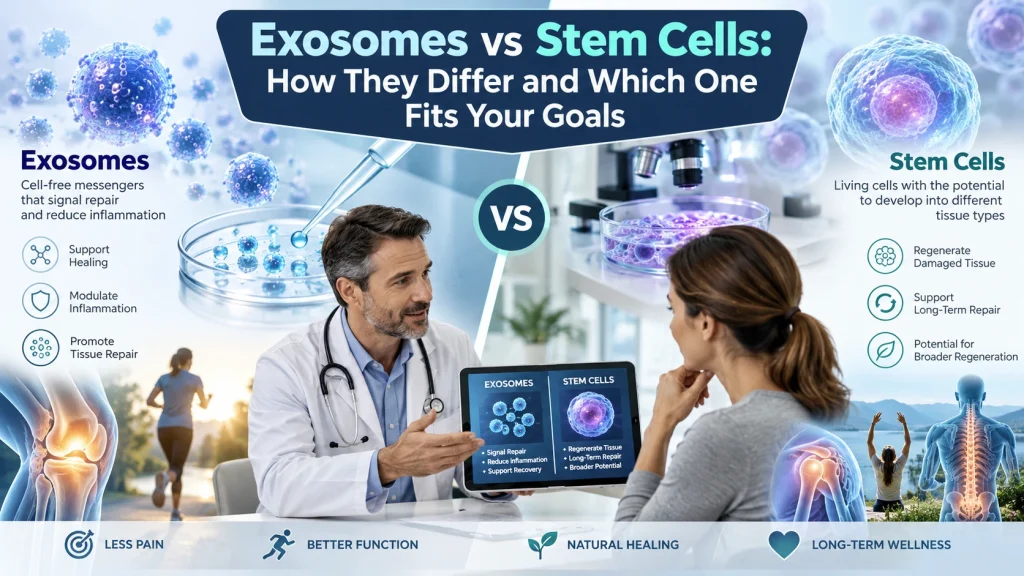
Exosomes and stem cells are both used in regenerative medicine, but they aren’t the same thing. Stem cells are living cells that can turn into new tissue, while exosomes are tiny particles stem cells release to signal repair, without any live cells attached. Stem cells tend to work best for structural damage like cartilage loss, […]
Stem Cell vs PRP: Which Regenerative Treatment Is Right for You?
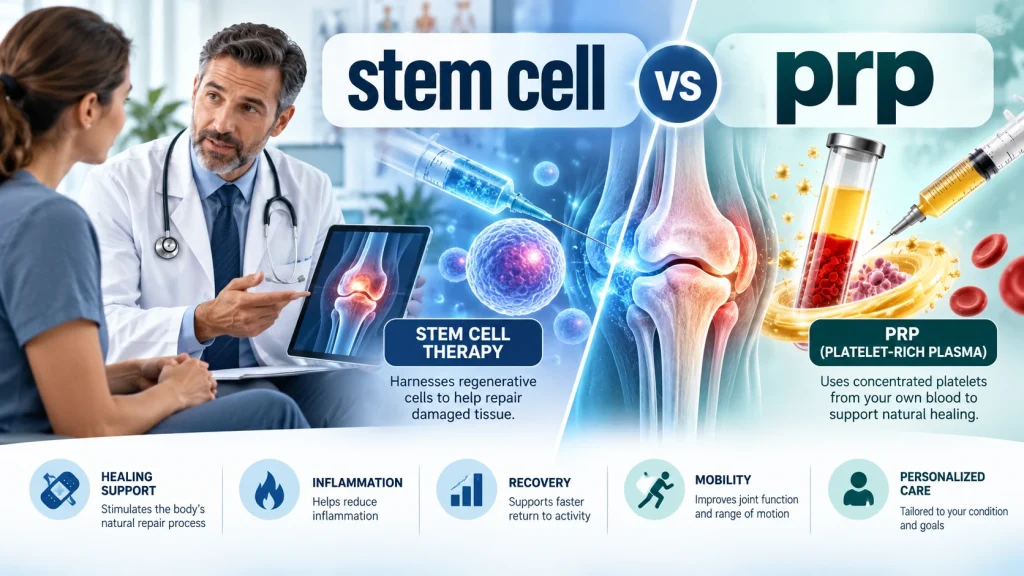
PRP uses concentrated platelets from your own blood to send healing signals to damaged tissue, while stem cell therapy introduces cells that can actually grow into new tissue. PRP tends to work best for mild to moderate injuries and typically costs less, while stem cells are often chosen for deeper joint damage. Your condition, your […]
How Long Does Stem Cell Therapy Take to Work?
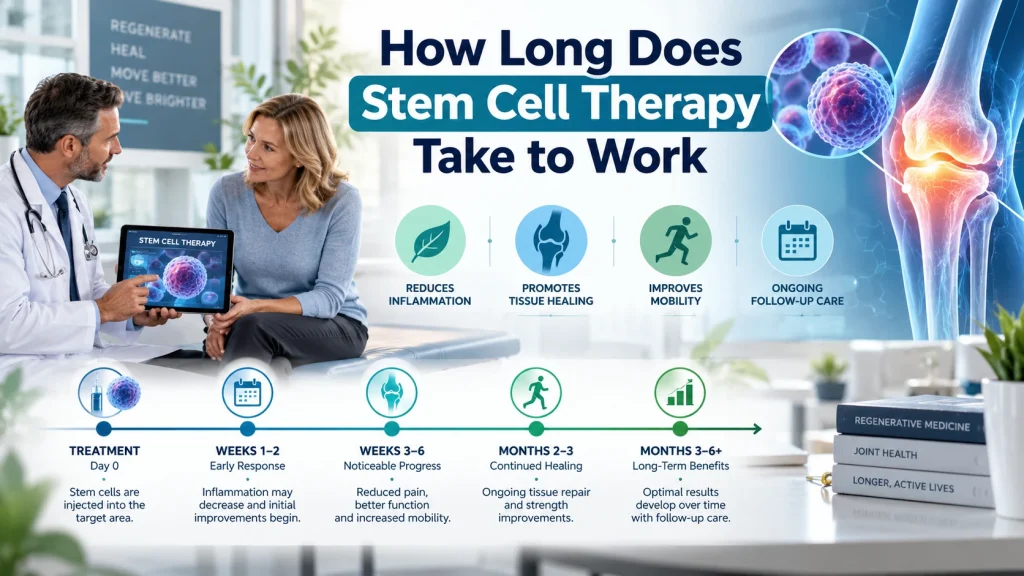
Most patients notice early changes within 2 to 6 weeks as inflammation drops and early tissue repair begins. Full results typically build over 2 to 6 months and can keep improving for up to a year. Knees tend to respond faster than the back or spine. The exact timeline depends on your age, the severity […]
Stem Cell Therapy for Knees
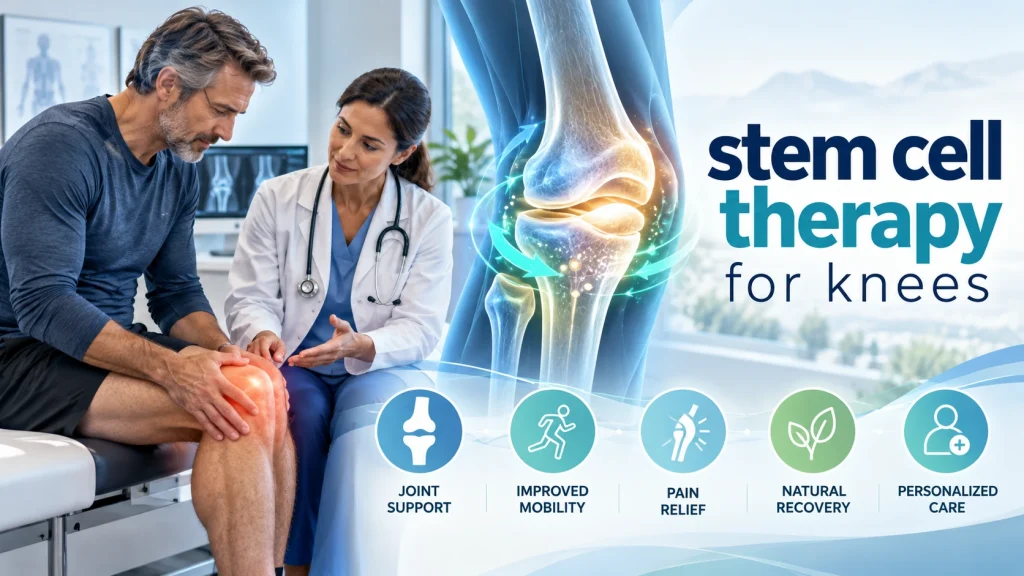
Stem cell therapy for knees uses a concentrated dose of your own cells to calm inflammation and support joint repair. A 2025 review of 25 clinical trials found it modestly improves pain and function compared with a placebo injection. It tends to work best for mild to moderate osteoarthritis in people who want to delay […]