Exosomes and stem cells are both used in regenerative medicine, but they aren’t the same thing.
Stem cells are living cells that can turn into new tissue, while exosomes are tiny particles stem cells release to signal repair, without any live cells attached.
Stem cells tend to work best for structural damage like cartilage loss, while exosomes are often chosen for inflammation, skin, and hair concerns.
If you’ve spent any time researching regenerative medicine, you’ve probably run into two terms that sound alike but work very differently: exosomes and stem cells.
Patients at our Boca Raton clinic bring up this exact comparison almost every week, usually after reading conflicting claims online.
The exosomes vs stem cells question matters because it changes what result you can realistically expect, how much you’ll likely pay, and how closely the treatment is regulated.
Here’s what actually separates the two, and how to think about which one fits your situation.
SEE IF STEM CELL THERAPY IS RIGHT FOR YOU
What Is the Difference Between Exosomes and Stem Cells?
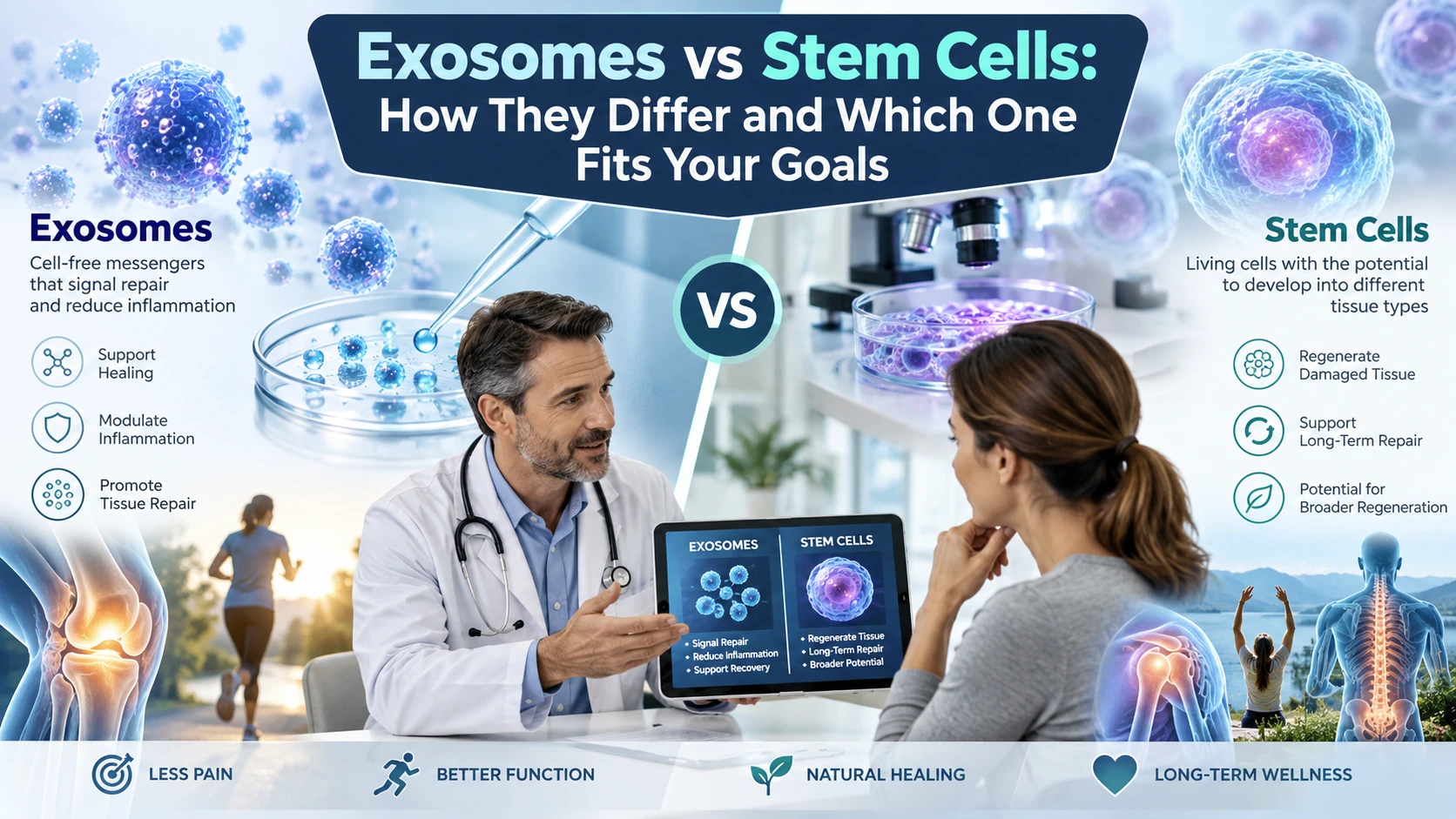
Stem cells are living cells that can divide and transform into different types of tissue, while exosomes are tiny vesicles that cells release to send signals to nearby tissue.
Stem cells physically rebuild damaged structures over time.
Exosomes don’t build anything themselves; they tell your existing cells to repair faster and calm inflammation.
That single difference in how each one works drives almost every other distinction between them, from cost to recovery time.
Stem cell research also has a significant head start.
There are currently 7,018 registered stem cell clinical trials compared with just 158 for exosome therapies, a gap that reflects how much newer, and harder to standardize at scale, exosome manufacturing still is.
Are Exosomes Stem Cells?
No, exosomes are not stem cells.
Stem cells produce exosomes, not the other way around.
Every stem cell releases thousands of these signaling vesicles as part of how it communicates with the tissue around it, which is why exosome therapy is sometimes described as stem cell therapy without the cells.
Think of it like a factory and its mail room.
The stem cell is the factory, doing the actual building.
Exosomes are more like memos the factory sends out, carrying growth factors, proteins, and genetic material that instruct other cells on what repairs to make.
Researchers have found that these vesicles carry much of the same therapeutic cargo as their parent cells, without the live cell’s size, immune triggers, or risk of uncontrolled growth, which is part of why exosome therapy is being studied as an alternative in cases where live-cell treatment carries more risk.
How Stem Cell Therapy Works
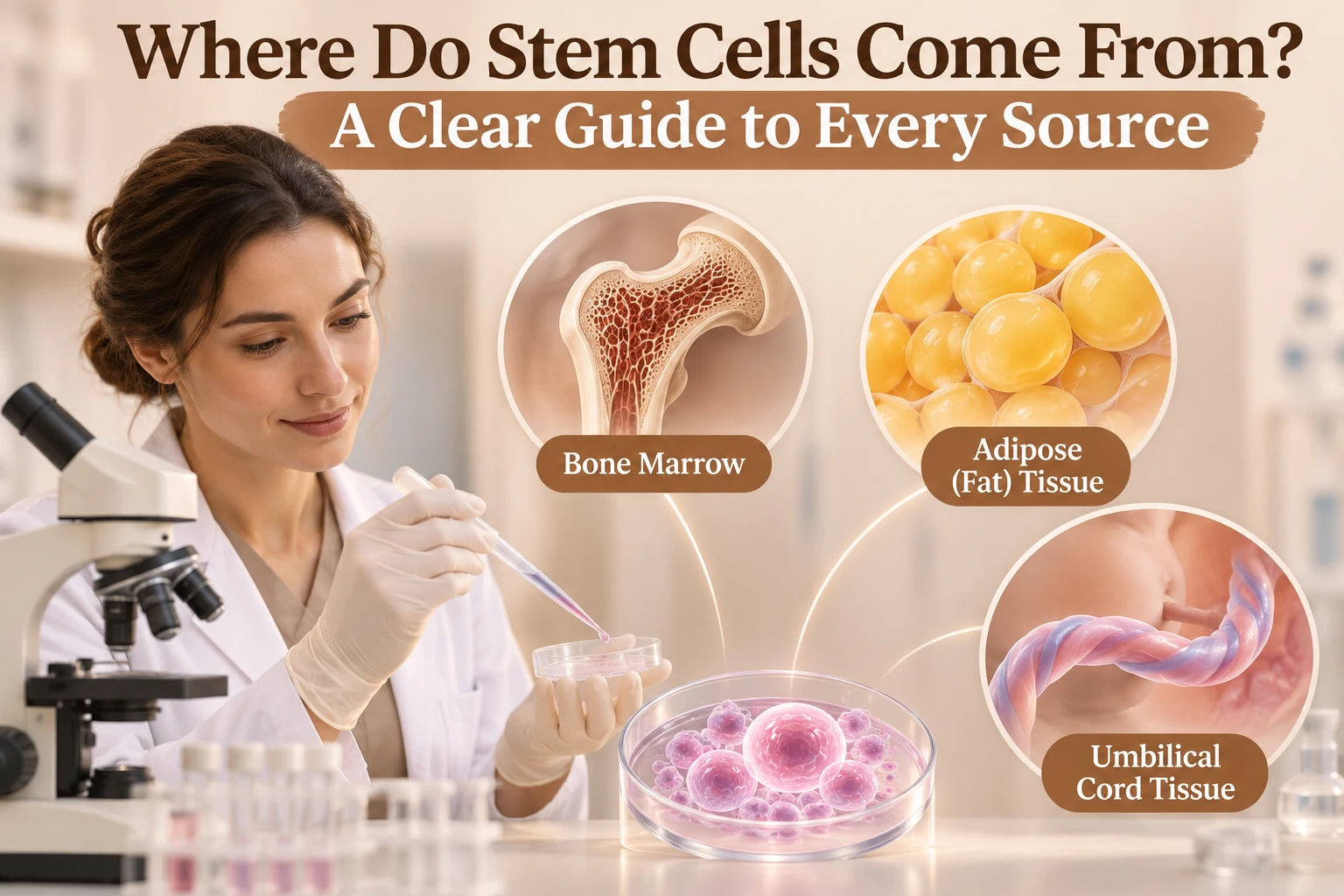
Stem cell therapy uses mesenchymal stem cells, most often collected from your own bone marrow or fat tissue, though some clinics use donor-derived umbilical cord tissue.
Once introduced into the damaged area, these cells can support tissue repair, reduce inflammation, and in some cases help form new, healthy tissue.
At Aven, this is offered through our regenerative cell therapy program, which uses your body’s own healing systems rather than surgery or long-term medication to address joint pain, soft tissue injuries, and certain chronic conditions.
It’s worth knowing that the FDA has only approved stem cell products derived from umbilical cord blood, and only for specific blood-related disorders, not for joints, discs, or sports injuries.
Most stem cell treatments for orthopedic use fall outside that approved pathway, which is why an honest conversation with your provider about sourcing and processing matters.
How Exosome Therapy Works
Exosome therapy delivers the signaling vesicles stem cells naturally release, without introducing any live cells into your body.
Because exosomes are so much smaller than stem cells and carry no genetic material of their own that could replicate, they can be processed, frozen, and stored far more easily, which keeps the treatment more consistent from session to session.
Our exosome injections are delivered directly into joints, soft tissue, or through an IV, depending on what you’re treating, and most patients notice gradual improvement over several weeks rather than an immediate change.
Exosomes can also enhance other regenerative treatments, which is one reason they’re often paired with peptides or stem cell therapy rather than used as a standalone replacement.
Exosomes vs Stem Cells: Side-by-Side Comparison
Stem cells generally outperform exosomes for significant structural damage, like advanced cartilage loss, because they can directly contribute to new tissue.
Exosomes generally win on safety, storage, and consistency, since there’s no live cell that can trigger an immune reaction or grow out of control.
| Aspect | Stem Cells | Exosomes |
|---|---|---|
| What it is | Living, undifferentiated cells | Cell-free signaling vesicles |
| Size | About 15–25 micrometers | About 30–150 nanometers |
| How it works | Can divide and become new tissue | Signals your existing cells to repair |
| Immune/safety risk | Small risk of rejection or uncontrolled growth | Minimal immune response, no live-cell risk |
| Storage | Requires careful handling, shorter shelf life | Can be frozen or lyophilized, more stable |
| Best suited for | Structural damage, cartilage loss | Inflammation, skin, hair, systemic recovery |
Recovery Time and Downtime
Stem cell therapy and exosome therapy both tend to work gradually rather than overnight.
Most patients notice initial changes within a few weeks, though how long stem cell therapy takes to work varies, with fuller results often building over several months as tissue remodels.
Exosome treatments, especially injections, typically involve less physical downtime since there’s no cell harvesting procedure involved, while stem cell therapy may require a short recovery period after the cells are collected, depending on the source.
Which Conditions Respond Better to Each Treatment?
Stem cells tend to be the better fit for significant structural problems like advanced osteoarthritis or cartilage loss, where the body needs more than a signal to repair.
Exosomes tend to work well for inflammation, skin aging, hair thinning, and general recovery support, where boosting your body’s own repair signals is often enough.
Joint Pain and Osteoarthritis
For joints with real structural damage, stem cells generally have the edge because they can directly participate in tissue repair rather than only sending signals.
A 2025 clinical study using umbilical cord-derived exosomes for knee osteoarthritis did show meaningful improvement in pain and function, with some cartilage thickening on imaging, so exosomes aren’t ruled out for joints either.
If you’re specifically weighing options for knee pain, our stem cell therapy for knees guide breaks down what to expect from that treatment specifically.
Skin, Hair, and Aesthetic Concerns
This is where exosomes tend to shine.
Because they’re small enough to penetrate skin when paired with microneedling, exosome facials are commonly used for fine lines, acne scarring, dullness, and uneven texture.
Exosomes are also used alongside hair restoration treatments to support thinning areas, since the growth factors they carry can help stimulate follicle activity without an invasive procedure.
Chronic Inflammation, Fatigue, and Brain Fog
For systemic concerns like chronic fatigue, brain fog, or widespread inflammation, exosomes delivered by IV are often used to support the body’s broader repair signaling rather than targeting one specific structure.
Patients dealing with inflammatory conditions tied to the spine or autoimmune activity may also benefit from treatments built specifically for those issues, including our degenerative disc disease and autoimmune disease programs, which often combine regenerative approaches with functional medicine to address what’s driving the inflammation in the first place.
SEE IF STEM CELL THERAPY FITS YOUR NEEDS
Exosome and Stem Cell Therapy at Aven Clinic in Boca Raton
We offer both exosome and stem cell therapy at our Boca Raton clinic because, honestly, neither treatment is the right answer for every patient.
Our regenerative medicine program is built around figuring out what’s actually driving your symptoms first, then matching you to the treatment, or combination of treatments, that fits.
For South Florida patients dealing with joint pain, chronic inflammation, or visible signs of aging, we’d rather walk you through the real tradeoffs between exosomes and stem cells than push whichever treatment happens to be more profitable.
That’s the same approach we take when patients ask us how stem cells compare to PRP, and it’s why most of our treatment plans end up combining more than one regenerative approach rather than relying on just one.
How Do You Know Which Treatment Is Right for You?
The right treatment depends on what you’re actually trying to fix.
If you have significant structural damage, like advanced cartilage loss, stem cells are usually the stronger option.
If you’re managing inflammation, early joint wear, skin aging, or hair thinning, exosomes are often enough on their own, and they carry less risk while you figure that out.
The honest answer is that most patients don’t need to choose just one.
A combination approach, using stem cells for structural support and exosomes for ongoing signaling, is increasingly common because the two treatments work on different parts of the healing process.
The best next step is a conversation with a provider who looks at your specific condition, prior treatments, and goals, rather than one who defaults to whichever treatment they happen to offer.
If you’re trying to decide between exosomes vs stem cells for your own situation, Aven Clinic in Boca Raton can walk you through both options and help you figure out which one, or which combination, actually fits what you’re dealing with.
FAQs: Exosomes vs Stem Cells
Is exosome therapy safer than stem cell therapy?
Exosomes generally carry a lower risk profile because they’re not living cells, so there’s no risk of uncontrolled cell growth or the cells triggering an immune reaction. Stem cell therapy using your own cells is also considered quite safe, but risk depends heavily on where the cells came from and how they were processed.
Can exosomes and stem cells be combined in one treatment plan?
Yes. Many providers use exosomes alongside stem cell therapy, peptides, or PRP, since exosomes can support and enhance the signaling that other regenerative treatments rely on. Combining treatments is increasingly common rather than choosing one exclusively.
How long do results last with each therapy?
Both treatments tend to build results gradually over weeks to months rather than working immediately. How long results last depends on the condition being treated, how severe the damage is, and whether you need repeat sessions, which is something your provider should walk you through before you start.
Which treatment is better for joint pain, exosomes or stem cells?
For significant structural joint damage, like advanced cartilage loss, stem cells generally have an edge because they can directly contribute to tissue repair. For earlier-stage joint pain or inflammation, exosomes are often enough and carry a lower risk profile, which is why many providers start there before considering stem cells.